What Engineers and Buyers Should Specify for C110 Copper Busbar
A practical specification framework for copper grade, temper, dimensions, processing, joint surfaces and the evidence needed to compare busbar quotations.
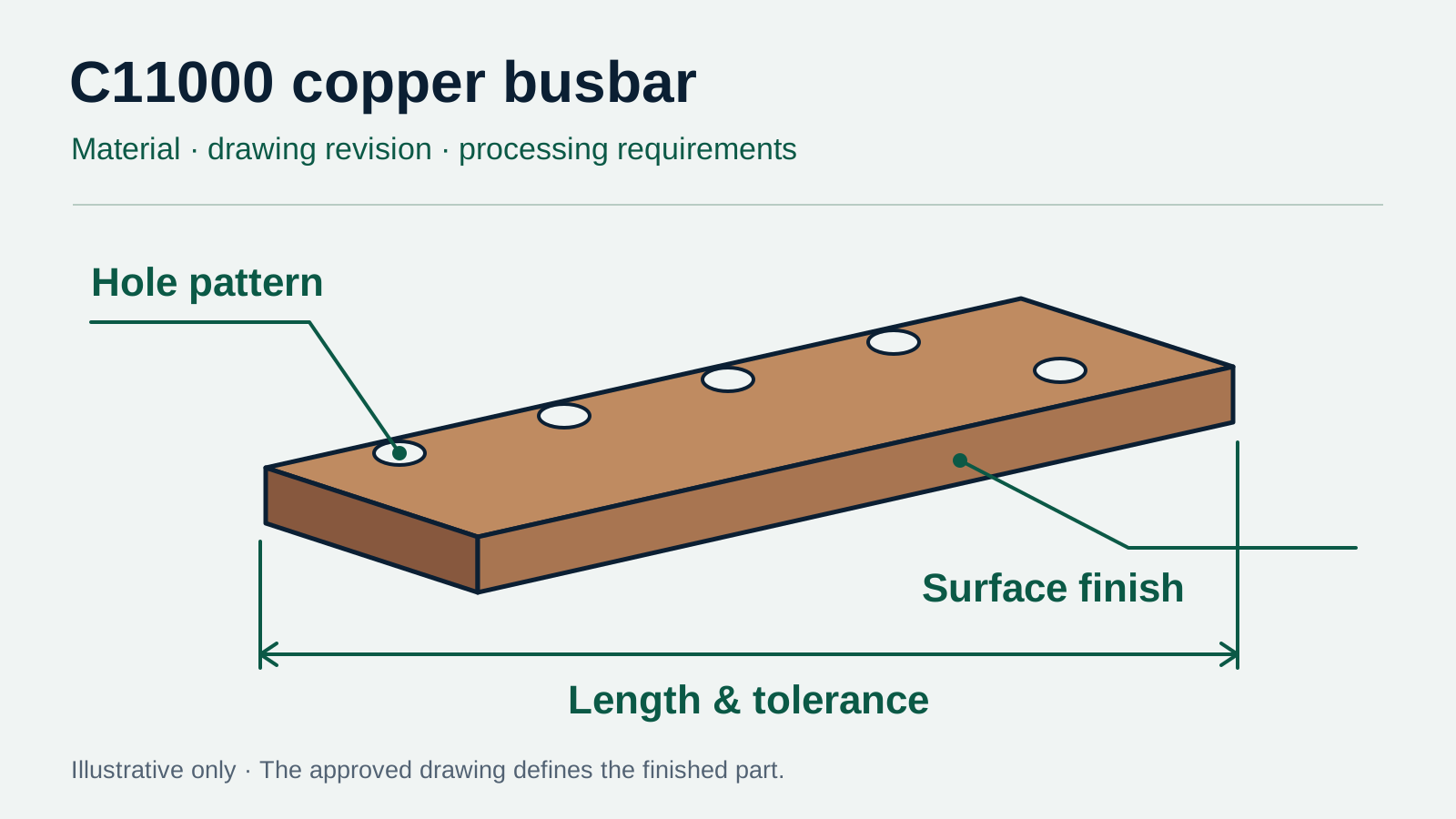
Conceptual busbar detail showing information to define in a specification. Dimensions, hole patterns and finish must follow the approved drawing; this is not a fabrication drawing.
Original Aurona editorial illustration
Key takeaways
- C11000 identifies a copper grade; the order still needs a standard, temper, dimensions and processing scope.
- Control the drawing revision and define contact surfaces before comparing quotations.
- Material documentation does not establish an assembly rating or approve a connection.
Start with the deliverable, not the material nickname
A request for C110 copper busbar can describe several different purchases: unprocessed bar for a fabrication shop, cut lengths for an assembly line, or finished components ready for a defined equipment interface. Those purchases need different drawings, inspection plans and commercial assumptions. Before seeking prices, state what the supplier must deliver and what work remains with the buyer. A photograph or the name of an existing assembly is useful context, but it does not establish a controlled component specification.
The Copper Development Association identifies C11000 as electrolytic tough pitch copper. That material identity is one input to the purchase, not a complete description of the finished part. Use the full designation in the specification and retain any approved alternative as a separate line. If a drawing uses a shortened name such as C110, resolve the intended designation before the quotation becomes a purchase order.
References: [1]
Separate the product standard from the temper
ASTM B187/B187M covers copper bar, rod and shapes, including electrical bus applications. Its public scope lists multiple copper designations, so citing the standard alone does not uniquely request C11000. Identify the intended material, applicable edition and any project requirements that supplement the standard. Ask the supplier to flag exceptions explicitly. A statement that material is broadly suitable for electrical use should not replace agreement on the ordered specification.
Temper is a separate requirement. ASTM B601 provides a classification system for temper designations; it is not itself the product specification that establishes all required properties. The engineering or fabrication authority should select the condition appropriate to the component. Procurement should carry that condition consistently through the drawing, quotation and acceptance record, rather than assuming that descriptions such as hard or half hard have been interpreted identically by every bidder.
Make geometry and revision control explicit
A useful drawing identifies thickness, width, finished length, hole locations, hole sizes and the reference surfaces from which measurements are taken. Where the assembly depends on them, specify edge treatment, flatness, straightness and allowable deviations using the project’s chosen drafting conventions. Keep the unit system visible. A supplier should not have to choose between a dimension in the email and a different dimension in an attached drawing.
Separate stock dimensions from finished dimensions. If the purchase is for cut blanks, identify the machining allowance and responsibility for subsequent operations. If it is for drilled parts, include the drawing revision and any orientation that affects assembly. A practical document register can list each part number, revision, quantity and matching file name. This makes a later engineering change traceable and helps prevent an apparently cheaper offer from covering a different scope.
References: [5]
Discuss processing before approving a substitute
Bending and other forming operations make the relationship between material condition and fabrication important. Copper Development Association guidance treats formability as a selection consideration. Do not infer a permitted bend from an unrelated sample, a photograph, or a generic material label. Give the responsible fabricator the actual geometry, selected temper and acceptance criteria, and ask for any feasibility concerns before the part is released.
The RFQ should state whether cutting, drilling, punching, deburring, bending or surface treatment is included. Where a proposed alternative changes the process, record the resulting dimensional or inspection implications for engineering review. A first-article approval can be useful when the buyer’s quality plan requires it, but it needs a defined drawing and acceptance scope. It should not become an informal waiver of unresolved material or dimensional requirements.
References: [4]
Specify the joint interface without prescribing a universal joint
The bar must eventually meet another component. Identify the mating part or interface drawing, the intended contact areas and any specified finish or metallic coating. Distinguish a requirement applied to the whole part from one applied only to selected surfaces. If the drawing requires a coating, include the controlling specification and the evidence needed to confirm it. Appearance alone is not a sufficient acceptance method for a functional surface.
Connection hardware, tightening instructions and permissible assembly methods belong to the approved equipment or connection design. A copper supplier’s material certificate does not approve the completed joint. Keep the responsibility clear when a busbar, lug, insulator and enclosure come from different sources. Where information is missing, raise a technical question with the design authority rather than allowing each supplier to make a separate assumption about the same interface.
Do not turn a material quotation into an ampacity approval
Copper Development Association busbar guidance illustrates that conductor configuration affects ampacity. A published table is tied to its stated arrangement and assumptions. The purchaser should therefore identify whether the order is for a material component or for an evaluated assembly with defined performance requirements. A bar of a particular width and thickness does not, by itself, establish the rating of the equipment into which it will be installed.
Ask the responsible engineer or equipment manufacturer to define the required electrical and mechanical performance and the evidence used to verify it. Procurement can then request those documents within the agreed supply scope. Keep unresolved performance questions visible in the bid comparison. Comparing the price of raw copper against the price of a processed, documented assembly without separating these obligations produces a misleading result.
References: [6]
Close the quotation with an evidence checklist
Before commercial acceptance, reconcile the quotation with the controlled requirement. Confirm whether the price covers material only, finished parts, inspection, documentation and packaging. Record any minimum order, quantity tolerance, proposed shipment sequence and stated validity period as supplier-specific terms. A requested delivery date and a supplier-confirmed commitment are different records; the comparison should show both without suggesting that a target has already been secured.
The following checklist provides a practical review structure. The project quality plan determines which records are mandatory and who is authorized to accept them. Keep the accepted quotation, approved deviations and drawing revision together so that receiving inspection can compare the delivered component against the same requirement that purchasing approved.
- Material designation, product standard, edition and temper are agreed.
- Finished dimensions, drawing revision, quantities and processing scope match.
- Surface treatment and mating-interface questions are resolved by the appropriate authority.
- Required material, dimensional and processing records are identified before ordering.
- Packaging, identification and any approved deviations are documented.
Sources & further reading
- C11000 Electrolytic Tough Pitch copper alloy data
Copper Development Association · Accessed
- ASTM B187/B187M-26: Copper, Bus Bar, Rod, and Shapes
ASTM International · Accessed
- ASTM B601-24: Temper Designations for Copper and Copper Alloys
ASTM International · Accessed
- Copper alloy selection: formability
Copper Development Association · Accessed
- Solutions for Electrical: copper busbars and connection products
nVent ERIFLEX · Accessed
- Table 4: Effect of Emissivity and Number of Busses on Ampacity
Copper Development Association · Accessed