Copper vs. Aluminum Busbar: Procurement Considerations
Compare conductor proposals through their complete design, connection interfaces, evidence and delivered scope—not through a material price alone.
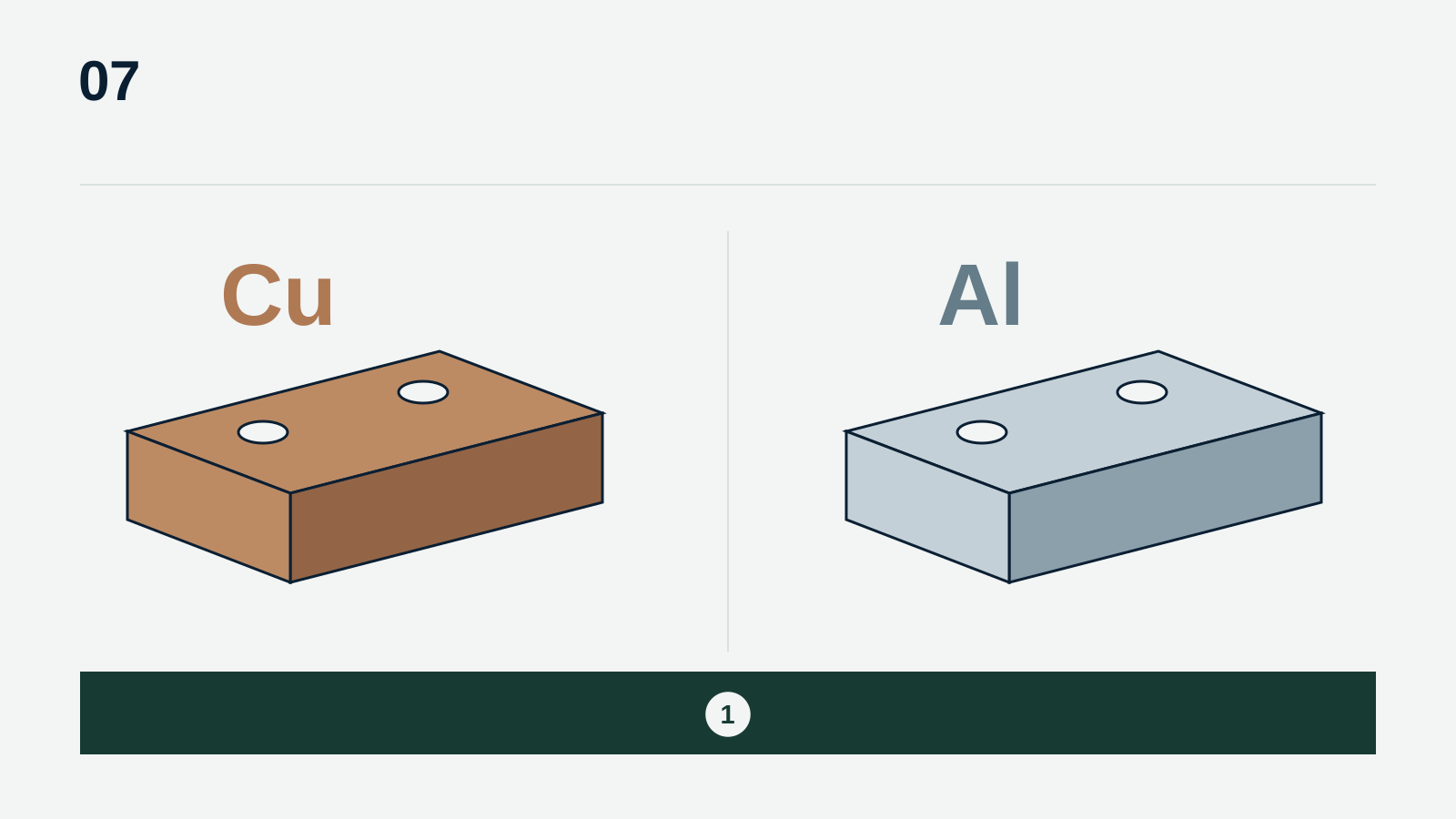
Illustrative material forms, not equivalent conductor designs or an ampacity comparison. Conductor sizing and joint suitability require project and manufacturer review.
- 1Compare conductor size, mass, joints and operating environment.
Original Aurona editorial illustration
Key takeaways
- Compare complete accepted solutions, including space, connections, documentation and processing.
- A material substitution can require design and interface review even when its price is attractive.
- Manufacturer-specific connection guidance is not a universal compatibility statement.
Compare solutions to the same requirement
Copper and aluminum busbar proposals are useful to compare only when they address the same equipment requirement. Start with the intended duty, available space, interfaces and required performance evidence. Then distinguish an offer for raw conductor material from an offer for processed parts or an assembled distribution system. A price per unit mass does not capture those differences and can hide work that will remain with the buyer.
An alternative material should enter the review as a proposed design change when it changes an approved component or assembly. Procurement can organize the information, but the responsible engineer or equipment manufacturer must decide whether the revised solution meets the application. Keep that decision separate from commercial preference. A lower price or a shorter proposed lead time is a reason to evaluate an option, not evidence that the option is technically equivalent.
Review space and mass within the actual design
Copper and aluminum differ in conductivity and density. Hydro’s busbar guidance describes the tradeoff between a larger aluminum conductor section and lower mass, while Eaton discusses how space and weight influence conductor selection. These relationships explain why identical dimensions are not a sound starting assumption. They do not establish a universal conversion rule for a particular busbar arrangement or enclosure.
Ask each bidder for the dimensions and mass of the complete proposed deliverable, including the parts within its supply scope. Check the resulting interfaces against the project layout and handling plan. If a changed section affects mounting positions, clearances, supports or enclosure details, capture those effects in the technical comparison. Avoid approving the material choice first and discovering that the associated geometry has not been accommodated later.
Identify the alloy, condition and processing scope
Neither copper nor aluminum is a complete purchasing designation. Specify the required material grade, condition and applicable product standard, then identify the processes included in the quotation. Manufacturer data for a particular aluminum alloy, such as Hydro’s EN AW-6101A/B sheet, illustrates why an alloy designation belongs alongside its stated properties and condition. It should not be used as a generic property sheet for every aluminum conductor.
Keep proposed alternatives visible in the bid register. Ask the supplier to identify any departure from the requested grade, temper, dimensions or finish, and require the appropriate technical disposition. If the buyer is purchasing fabricated parts, confirm whether inspection occurs before or after the final processing step. The relevant acceptance record must describe the delivered item rather than an earlier form of material that no longer matches the ordered scope.
References: [3]
Make each connection a defined interface
Connection compatibility is specific to the product and its approved installation method. Schneider Electric, for example, publishes conditions for joining particular copper and aluminum I-Line II busway sections. nVent offers a particular tinned aluminum earthing and neutral busbar intended for specified conductor connections. Such examples demonstrate the importance of an identified interface; they do not authorize an arbitrary copper-to-aluminum joint.
For a proposed substitution, request the mating-component reference, permitted conductor materials, surface treatment and applicable manufacturer instructions. Establish who checks the interface and who supplies the required hardware. Do not infer compatibility from a matching hole pattern or a similar catalog photograph. If a supplier proposes different connection components, review those components together with the conductor change rather than treating them as an incidental purchasing detail.
Compare electrical performance on a common basis
Conductor arrangement and installation conditions influence performance. Copper Development Association guidance shows that configuration affects busbar ampacity, and Eaton’s comparison discusses conductors in the context of equipment design. The procurement question is therefore what evidence supports the proposed application. A material conductivity value alone cannot demonstrate that a complete assembly meets all of its required ratings.
Ask the responsible design party to identify the acceptance basis before seeking alternate offers. For an assembled product, that may involve specified product documentation and applicable evaluation records; for a material component, it may involve the material and dimensional records required by the approved design. The bidder should state exactly which evidence is included. Keep missing information and assumptions visible until the authorized reviewer resolves them.
Build a commercial comparison that includes the consequences
A useful comparison records the price and scope of the complete accepted solution. Separate conductor material, fabrication, surface treatment, connection components, inspection, documentation, packaging and freight where the offers allow that separation. Note any additional design review or qualification work required by an alternative. An apparent saving should remain provisional until these differences have been examined.
The same principle applies to schedule. A quoted material date may not cover fabrication, document approval or shipment of the completed package. Ask for the assumptions behind each date and identify the actions required from the buyer. Where a supplier has not confirmed capacity or availability, retain the date as an estimate. Avoid converting a general market impression about either material into a project-specific delivery commitment.
- Compare the same functional requirement and clearly defined supply boundary.
- Record the actual dimensions, mass and interface changes of each proposal.
- Require explicit material, finish and connection information.
- Separate supplier-confirmed terms from assumptions and unresolved approvals.
Leave a decision record that downstream teams can use
The final selection should be traceable to the requirement and the approved proposal. Preserve the comparison, technical clarifications, accepted deviations and released drawings with the purchase record. Receiving, assembly and maintenance personnel need to know which configuration was actually accepted. A short approval note that names only the preferred metal can lose the conditions that made the decision valid.
This approach also makes a decision easier to revisit. If the project later changes its equipment layout, quantity or installation conditions, the team can identify which assumptions require a new review. Copper and aluminum should be assessed as parts of defined solutions. The strongest procurement outcome is an agreed configuration with clear evidence and responsibilities, rather than an unsupported claim that one conductor material is always the better choice.
Sources & further reading
- Aluminum—the other conductor: Application Paper AP083003EN
Eaton · Accessed
- Aluminium busbars and tubular conductors
Hydro · Accessed
- EN AW-6101A/B: aluminium alloy technical data
Hydro · Accessed
- Can Copper and Aluminum Bus Duct be connected together?
Schneider Electric · Accessed
- Tinned Aluminum Earthing and Neutral Busbar
nVent ERIFLEX · Accessed
- Table 4: Effect of Emissivity and Number of Busses on Ampacity
Copper Development Association · Accessed