Grounding & Bonding RFQs: A Practical Requirements Checklist
Define conductors, bars, connectors, mounting details and documentation as coordinated purchasing requirements for an approved grounding and bonding design.
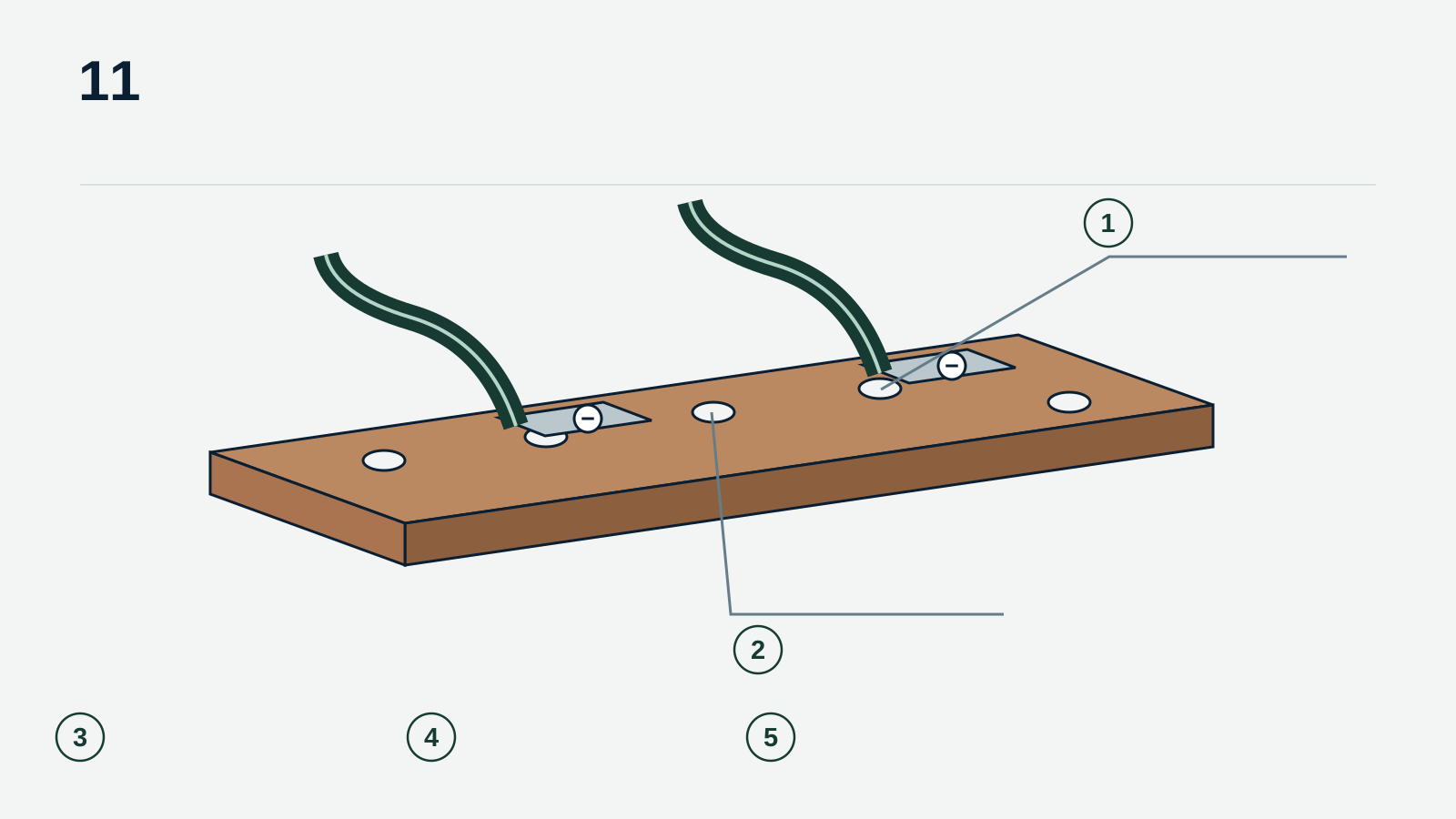
Conceptual connection detail for discussing RFQ inputs. It does not prescribe conductor sizing, bonding arrangements, wire colors, lug compatibility or a grounding design.
- 1Lug interface
- 2Hole + mounting pattern
- 3Material
- 4Finish
- 5Drawing revision
Original Aurona editorial illustration
Key takeaways
- A grounding and bonding RFQ translates an approved design into defined components; it does not replace that design.
- Specify conductors, connectors and mounting interfaces together.
- Require evidence for the exact ordered product and preserve approved revisions through delivery.
Translate an approved design into a purchasing package
A grounding and bonding RFQ should describe the components required by the project’s approved design. It should not ask a material supplier to infer the design from a site photograph or a partial list of copper parts. Begin with the application, installation location and controlled drawings. Identify the party responsible for engineering decisions and the process for resolving questions about conductor selection, connections or mounting arrangements.
Grounding and bonding components operate within a larger system. Manufacturer guidance addresses those system relationships, but a general application guide is not a site-specific design. Keep the procurement task bounded: define the required deliverables, obtain clear supplier responses and preserve the evidence requested by the project. Site conditions, protection requirements and final acceptance remain with the appropriate qualified design and installation authorities.
References: [6]
Create a component register with usable references
Group the request into identifiable items: bars, conductors, lugs or connectors, bonding jumpers, mounting components and any specified accessories. Give each item a part reference or drawing reference, quantity and unit of measure. If the request is for a complete kit, list what the kit must include. A single description such as grounding package leaves too much room for bidders to price different scopes.
For a fabricated bar, define the material, finish, dimensions, hole pattern and mounting interface through the controlled drawing. nVent’s grounding-busbar product information illustrates the range of configuration choices, including mounting and connection arrangements. Use the actual project requirement to select these details. Do not assume that a bar shown in a supplier catalog carries the same pattern, accessories or installed purpose as the required component.
References: [2]
Specify the conductor and connector together
A connector description needs the conductor information that establishes the intended interface. Identify the conductor material, size designation and construction as required by the selected product and design. Hubbell’s GBM26 product record, for example, distinguishes conductor and mounting details rather than describing the item simply as a copper lug. That specificity matters when the proposed connector must meet both a cable and a bar or structural interface.
Ask the bidder to identify the exact proposed connector and the manufacturer’s applicable data. Confirm which supplied parts are included and which must be ordered separately. Where an alternative is proposed, route it to the authorized technical reviewer with its complete interface information. A matching physical opening, familiar brand name or similar appearance does not establish that the replacement is suitable for the intended conductor and installation.
References: [4]
Carry installation conditions into the request
Connection selection should consider the environment and the conditions the approved design addresses. nVent’s discussion of grounding connections identifies mechanical, electrical and environmental influences on the connection over time. The RFQ should communicate the relevant application conditions that the design authority has specified, including whether the component is indoors, outdoors or in another defined exposure. Avoid expecting a bidder to infer those conditions from a project name.
For equipment interfaces, include the surface and mounting requirements established by the responsible manufacturer or designer. State any specified finish or coating and the controlling document. If different metals or a change of surface treatment are proposed, request an explicit compatibility review. Procurement should preserve these questions for resolution rather than choosing a generic installation method or assuming that one protective finish suits every environment.
References: [5]
Request instructions and evidence with the component
The installation method belongs to the selected connection system. BURNDY’s grounding documentation distinguishes product-specific tools, dies and other installation information for its connection products. The procurement package should therefore identify the instructions and accessories required for the actual ordered item. It should not extract a generic torque, tool setting or assembly procedure from a different product and apply it across the entire bill of materials.
Where the project requires installation or inspection records, identify who produces them and when they are delivered. A supply quotation can include manufacturer documentation without including field installation or commissioning. Make that boundary explicit. If the buyer expects a contractor to record installed connections, the contractor’s scope and the material supplier’s documentation scope should align instead of leaving each party to assume that the other will provide the final evidence.
References: [3]
Check the scope of any certification requirement
UL Solutions distinguishes grounding and bonding component evaluations from lightning-protection component evaluations and identifies different standards for those categories. A general reference to a certification organization is therefore not enough to specify a component. State the applicable project requirement, then request evidence that relates to the exact product and intended use. Do not transfer a certification claim from a product family or neighboring catalog item to an unverified part.
The buyer’s reviewer should reconcile the supplied documentation with the ordered designation and any accepted alternative. If a certificate, listing reference or conformity statement is required, agree the form of that evidence before release. Keep unavailable or incomplete evidence visible in the clarification register. A declaration that a supplier follows good practices does not replace a specific record that the purchase requirement makes mandatory.
References: [1]
Use a short closeout review before ordering
Before accepting a quotation, compare every line against the current bill of materials and drawings. Check quantities, included accessories, material and finish, documentation and approved substitutions. Record any unresolved technical question with a decision owner. Separating these questions from the commercial negotiation helps prevent a delivery discussion from being mistaken for approval of an incomplete technical scope.
Receiving and installation teams should inherit the same accepted record. Include the approved item list, revisions, supplier references and required documents in the handover. If the project changes, update that record deliberately rather than relying on a superseded email attachment. The aim is a clear link from the engineered requirement to the quoted component, the delivered item and the evidence required for its eventual acceptance.
- Identify each bar, conductor, connector, jumper and mounting item.
- Supply approved drawings, material requirements and interface information.
- Request product-specific instructions and agreed conformity records.
- Resolve substitutions through the designated technical authority.
- Keep requested dates separate from supplier-confirmed commitments.
Sources & further reading
- Grounding and Lightning Protection Component Evaluations
UL Solutions · Accessed
- Grounding Busbar: configurations and product information
nVent ERICO · Accessed
- Grounding Catalog (Metric Version): grounding and bonding connections
Hubbell BURNDY · Accessed
- GBM26 mechanical grounding connector: product data
Hubbell BURNDY · Accessed
- Electrical & Grounding Connection Technologies: Part 1 of 3
nVent · Accessed
- Grounding, Bonding and nVent ERICO Cadweld Solutions Guide
nVent ERICO · Accessed