
From Requirement to Reviewed Quote: How Industrial Sourcing Should Work
An industrial inquiry begins with a requirement and a record of what remains unknown. A disciplined review keeps customer information, supplier evidence and commercial decisions connected without treating an intake receipt as a completed quotation.
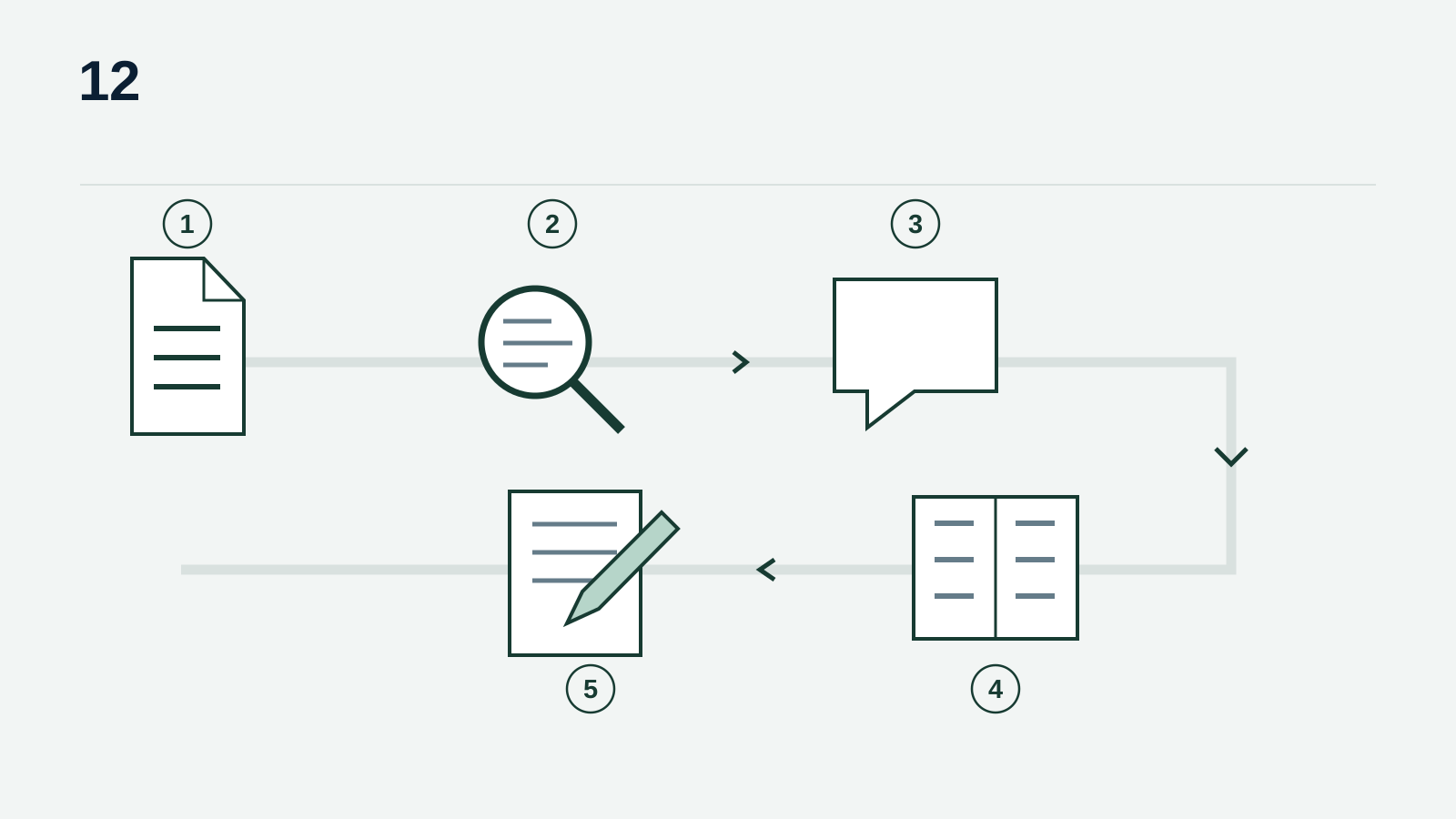
Illustrative sourcing review sequence. It represents the information and review stages, not automated supplier verification, engineering approval, order acceptance or a committed lead time.
- 1Requirement
- 2Supplier research
- 3Clarification
- 4Comparison
- 5Human review
Original Aurona editorial illustration
Key takeaways
- An RFQ receipt establishes an inquiry; it does not accept an order or reserve stock.
- Keep source documents, revisions, clarifications and supplier exceptions connected.
- Human review must distinguish technical authority, commercial approval and supplier confirmation.
Begin with the requirement and keep its original meaning
Industrial sourcing starts with a buyer trying to obtain something specific: a transformer for a defined application, switchgear for a project package, or conductive material made to an identified grade and drawing. The first task is to preserve that requirement. Product family, quantity, units, destination and required date belong together with the documents that explain them. If information is incomplete, the gap should stay visible until someone authorized to answer resolves it.
Aurona’s intended first-release process combines website RFQ intake with human review. The intake is designed to let buyers describe a requirement and provide relevant specifications, drawings or a bill of materials. The purpose is to establish a reviewable inquiry. A submission receipt does not accept an order, create a contract, reserve inventory or confirm a delivery date. Those distinctions matter because acknowledgment of information and agreement to supply are different decisions.
Receive documents without confusing receipt and approval
The intake is designed to connect the buyer’s contact information and request details with the files submitted for that inquiry. Its private-file controls are designed to keep pending or unscanned customer documents outside normal processing until the required checks allow it. File acceptance is not technical approval of the drawing, confirmation of its accuracy or a promise that every proposed item can be sourced.
A reviewer needs a coherent document set. Give each drawing or schedule a recognizable identifier and revision. Explain which document controls when two attachments disagree. In a hypothetical example, a bill of materials might state a quantity in pieces while a drawing schedule expresses a total length. The useful next step is a clarification that preserves both original statements until the buyer identifies the intended purchase quantity and unit.
Treat supplier research as a human evidence task
The human sourcing work that may follow intake starts with identifying which suppliers could address the requirement and what evidence is needed to evaluate a response. Company identity, offered scope, applicable documentation and any proposed deviations need review. A website listing or catalog image can introduce a product family; it does not establish an authorized relationship, available inventory or a commitment to fulfill this inquiry.
Use precise language for evidence. ISO’s conformity-assessment guidance distinguishes a supplier’s own declaration from independent third-party certification and emphasizes the object and requirements to which an attestation applies. In practical purchasing terms, a reviewer should identify what a document covers rather than turning any certificate into a blanket assurance. The existence of a supplier document also does not mean Aurona holds that certification.
References: [1]
Make clarification a controlled conversation
A clarification should identify the item, the controlling document and the decision needed. “Please confirm the specification” asks too much at once. “The schedule and drawing show different revisions; which governs this item?” gives the recipient a concrete question. Record the answer with the inquiry so a later reviewer can understand why the scope changed. Where the answer affects supplier responses, communicate the revised requirement consistently.
Equipment documentation shows why context matters. The Alaska Energy Authority’s published transformer RFQ separates technical requirements from submittal and delivery obligations. Schneider Electric’s SureSeT guidance directs project-specific installation arrangements back to customer order drawings. These are examples of information discipline, not evidence that either organization is an Aurona customer or partner. The general lesson is to connect a statement to the document and project stage where it applies.
Compare supplier responses against the same requirement
A useful comparison starts with scope. List the requested item and the supplier’s proposed response, then note differences in material, equipment configuration, documentation, quantity, packaging, delivery terms or excluded services. Keep options separate from the base offer. Preserve the supplier’s original wording alongside any internal comparison notes so the review does not accidentally turn a conditional response into an unconditional promise.
Consider a hypothetical pair of offers for conductive material. One includes a specified finish and agreed documentation; the other prices unfinished material and treats the documentation as an additional item. Comparing only the total would conceal the difference. The reviewer should resolve scope first, then compare the commercial terms that remain. If an alternative changes the approved requirement, the responsible customer or technical reviewer must decide whether it is acceptable.
Keep human review and authority explicit
The intended first-release workflow calls for people to review inquiries and record follow-up work. Supplier investigation, technical clarification and commercial comparison are human tasks; this description does not claim an automated supplier search or an automatically approved quote. Submitting a form does not cause the website to approve a substitute or make a binding supply commitment. A technical question should reach a person qualified and authorized to resolve it.
Before presenting a reviewed commercial proposal, confirm the scope, supporting information, assumptions and outstanding decisions. Identify who may approve a technical deviation and who may accept the commercial terms. Those roles can be different. An internal status change is not evidence that a manufacturer has accepted an order or that the customer has authorized a substitution. Keep external confirmations and internal review notes distinguishable.
Aim for an outcome another person can understand
A well-kept inquiry record should let a new reviewer answer basic questions without reconstructing the entire conversation: what did the buyer request, which revision governed, what did the supplier offer, what changed, and who approved the change? When something remains unresolved, identify it directly. A clear open item is more useful than polished language that suggests certainty the record does not support.
Aurona’s sourcing position is to work with third-party manufacturers and suppliers subject to the actual requirement and confirmation. The professional standard described here comes from disciplined information handling and careful human decisions, not claims of owned factories, stock or universal supplier access. A reviewed inquiry can support the next commercial conversation. Product availability, documentation and lead time still need confirmation for the specific proposed supply.
Sources & further reading
- Attestations of conformity
ISO Committee on Conformity Assessment (CASCO) · Accessed
- RFQ 25029 — Kwethluk Padmount Transformer Purchase, Appendix A Specifications
Alaska Energy Authority · Accessed
- Installation — SureSeT MV Indoor Switchgear User Guide, NNZ9886800
Schneider Electric · Accessed